For many people, this goes beyond normal shyness. It may be a sign of social anxiety disorder, a mental health condition that can significantly affect confidence, relationships, career growth, and emotional well-being.
Without timely support, this condition can lead to social withdrawal, low self-esteem, avoidance behaviors, and long-term emotional distress. Early intervention can make a major difference in recovery.
Mind Veda supports individuals through therapist-guided, evidence-based counselling designed to reduce anxiety, improve confidence, and build healthier emotional patterns.
Key Takeaways
Social anxiety affects emotional health and daily functioning
It can impact work, relationships, and self-confidence
Professional counselling helps identify triggers and thought patterns
Therapy improves communication confidence and emotional resilience
Mind Veda offers expert counselling for anxiety and emotional wellness
What is Social Anxiety Disorder?
Social anxiety disorder is a mental health condition involving intense fear or anxiety in social or performance-related situations.
Individuals often fear:
Being judged
Being criticized
Saying something wrong
Being embarrassed
Being observed by others
Unlike normal nervousness, this condition creates excessive fear that interferes with daily life.
Common symptoms include:
Rapid heartbeat
Sweating
Shaking
Blushing
Difficulty speaking
Avoiding social situations
Symptoms and Daily Impact
Many individuals also struggle with:
Low self-esteem
Isolation
Overthinking conversations
Difficulty speaking in groups
Fear of public interactions
How Social Anxiety Builds
Social Situation
↓
Fear of Judgment
↓
Overthinking
↓
Anxiety Response
↓
Avoidance
Common Causes of Social Anxiety
Several emotional and psychological factors can contribute to anxiety in social situations.
Common causes include:
Childhood trauma
Negative social experiences
Bullying
Low self-confidence
High sensitivity to criticism
According to World Health Organization, anxiety disorders are among the most common mental health conditions worldwide.
These factors can increase the risk of developing social phobia disorder.
How Counselling Helps in Social Anxiety Treatment
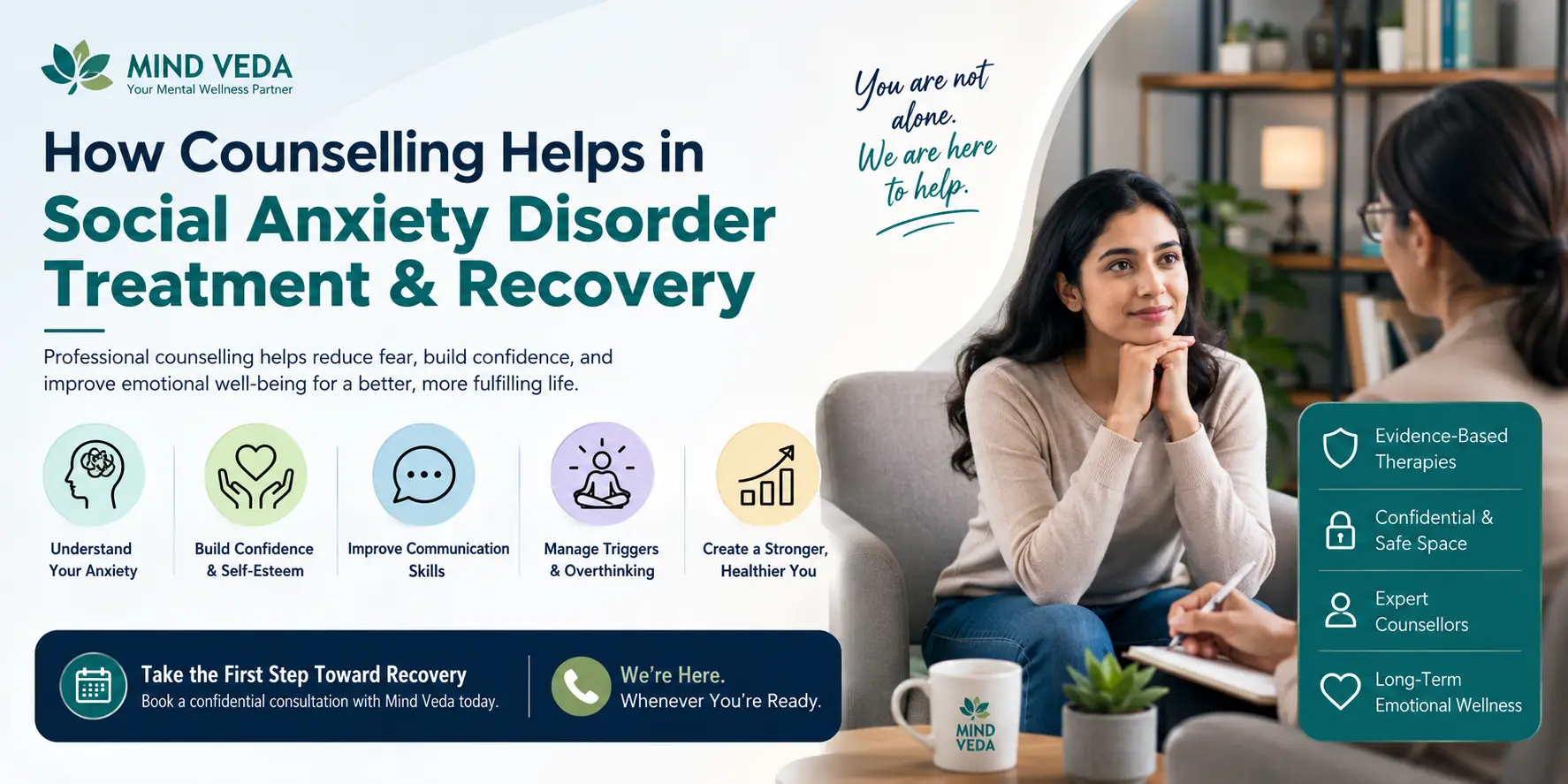
Professional counselling is one of the most effective approaches for managing social anxiety disorder because it addresses both symptoms and root causes.
Rather than offering only temporary relief, counselling helps individuals understand anxiety triggers, challenge negative thought patterns, and build long-term confidence.
Counselling helps individuals:
Identify anxiety triggers
Challenge negative thinking
Improve confidence
Build communication skills
Reduce avoidance behavior
Evidence-based approaches include:
Cognitive Behavioral Therapy (CBT)
Exposure therapy
Emotional regulation techniques
Mindfulness counselling
These clinically supported approaches help individuals gradually feel safer and more confident in social situations.
Talk to a Mind Veda Counsellor Today
If social anxiety is affecting your confidence, career growth, or relationships, professional support can help.
Problem Solving: Practical Steps Toward Recovery
Recovery happens through small but consistent progress.
1. Identify Trigger Situations
Understanding triggers reduces uncertainty.
2. Challenge Negative Thoughts
Replacing fearful thoughts improves confidence.
3. Build Communication Skills
Practice improves comfort in social settings.
4. Reduce Avoidance
Gradual exposure helps build confidence over time.
These approaches are highly effective in managing social anxiety disorder and improving emotional resilience.
When Should You Seek Professional Help?
Seek professional support if:
Social situations cause intense fear
Anxiety affects work or studies
Relationships are suffering
Avoidance is increasing
Confidence is declining
Early intervention improves recovery outcomes for social anxiety disorder.
Best Treatment Options for Social Anxiety
Recovery often requires personalized treatment approaches.
Effective options include:
Individual counselling
CBT
Exposure therapy
Confidence-building exercises
Emotional wellness support
Qualified mental health professionals can create a personalized recovery plan based on symptoms and emotional needs.
Mind Veda develops personalized counselling plans for long-term recovery.
Client Story: Recovery Through Counselling
A 27-year-old marketing professional struggled with intense fear during presentations and meetings. Speaking in groups caused severe anxiety, sweating, and overthinking.
Over time, this affected her career growth and confidence.
She was experiencing symptoms of social anxiety.
Through counselling, she learned:
Trigger management
Thought restructuring
Communication skills
Confidence-building techniques
Within months, she became significantly more confident and reduced her anxiety.
Recovery Journey
Assessment
↓
Trigger Identification
↓
Counselling Sessions
↓
Confidence Building
↓
Recovery
Real Experiences: How Mind Veda Supports Recovery
Many individuals silently struggle with anxiety, self-doubt, and emotional stress.
Mind Veda supports individuals dealing with:
Social anxiety
Stress and burnout
Emotional instability
Low confidence
Overthinking
Relationship challenges
Counselling focuses on long-term emotional healing and confidence-building.
Clients develop healthier coping strategies, stronger resilience, and improved communication confidence.
Benefits of Counselling for Recovery
Professional counselling helps individuals:
Reduce anxiety
Improve confidence
Build communication skills
Reduce overthinking
Strengthen resilience
Improve mental wellness
For individuals struggling with social anxiety disorder, counselling creates a strong path toward recovery.
Conclusion
Social anxiety can deeply affect confidence, relationships, career growth, and emotional well-being. Left untreated, it can lead to isolation and long-term distress.
But recovery is possible.
With professional counselling, individuals can challenge anxiety, improve confidence, and build healthier emotional patterns.
Overcoming social anxiety disorder is possible with the right support and guidance.
Start Your Healing Journey with Mind Veda
You do not have to struggle alone.
Mind Veda helps individuals overcome anxiety, build confidence, and improve emotional wellness through expert counselling.
Book your confidential consultation with Mind Veda today and take the first step toward recovery.
FAQs
1. What are the symptoms of social anxiety disorder?
Common symptoms of social fear disorder include fear of judgment, sweating, blushing, shaking, avoidance of social situations, and intense anxiety during interactions.
2. Can social anxiety disorder be cured?
Yes. With proper counselling, therapy, and consistent support, many individuals successfully manage symptoms and significantly improve their quality of life.
3. What is the best treatment for social anxiety?
The most effective treatments include Cognitive Behavioral Therapy (CBT), exposure therapy, and professional counselling.
4. How long does recovery from social anxiety take?
Recovery depends on symptom severity, triggers, and consistency in therapy. Some individuals see progress within weeks, while others may need longer support.
5. Can counselling really help with social anxiety?
Yes. Counselling helps identify triggers, reduce negative thinking, improve confidence, and build healthier coping strategies.